


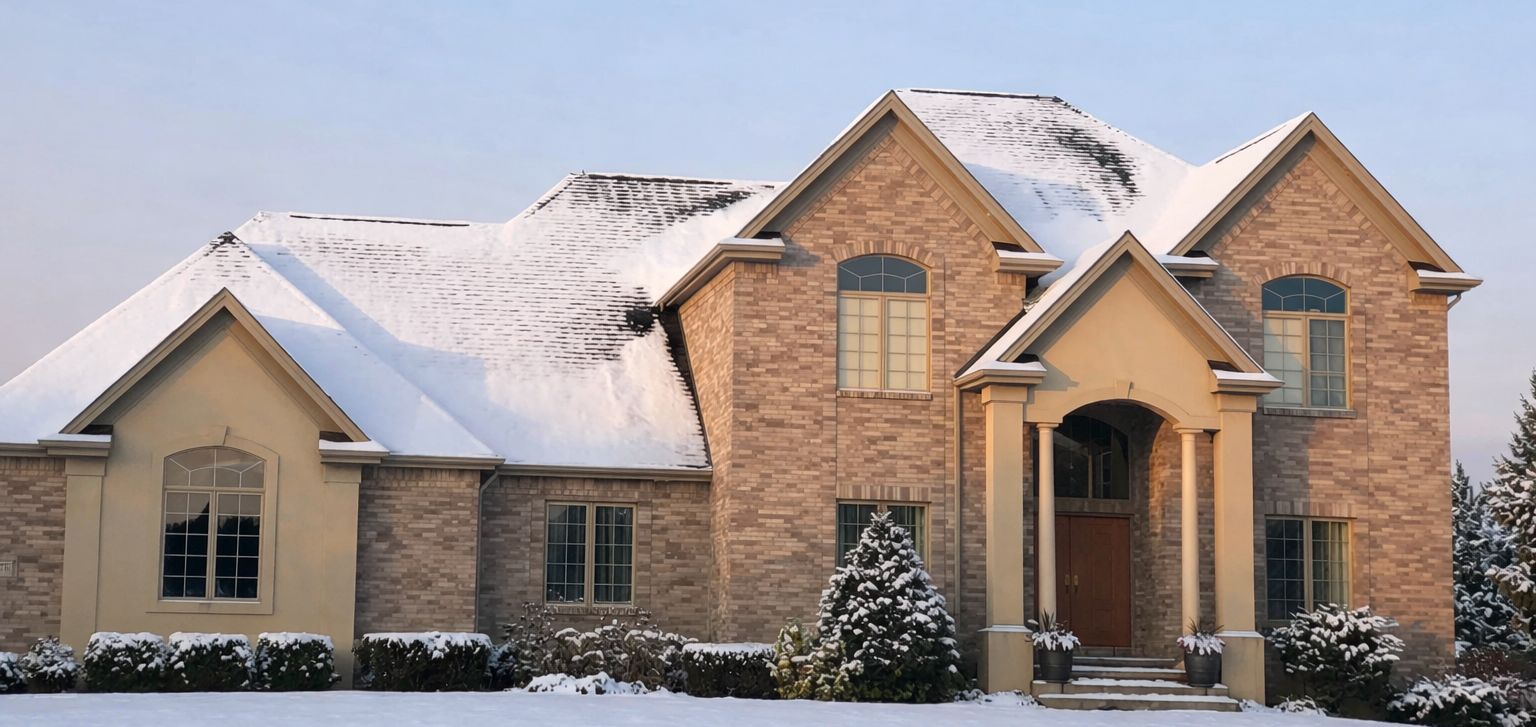
Winter in Michigan’s Upper Peninsula brings heavy snow, freezing nights, and long stretches of cold air. While most homeowners watch for ice dams or roof leaks, another hidden issue can quietly cause damage inside the attic. Roof condensation in Upper Peninsula homes often begins as frost on nails or roof decking. When temperatures warm, that frost melts and turns into water inside the attic.
Many homeowners mistake this moisture for a roof leak. In reality, roof condensation houses usually come from trapped warm air rising from inside the home. Once that warm air meets the cold roof deck, it condenses into frost. When the temperature rises, the frost melts and drips onto insulation and ceilings.
Understanding roof condensation in Upper Peninsula homes is important for protecting your roof, attic insulation, and indoor air quality. In this guide, local roofing experts explain why condensation forms, the warning signs to watch for, and how proper ventilation prevents moisture problems.
Why Attic Frost Turns Into Water Damage
During winter, warm air from living spaces naturally rises upward into the attic. If that warm air contains moisture from everyday activities like cooking, showers, or laundry, it carries that humidity into the attic space.
When the warm humid air meets the freezing roof deck, condensation forms.
In extreme cold conditions common in the Upper Peninsula, that condensation quickly freezes. The result is frost coating nails, rafters, and roof sheathing. Over time, this frost buildup becomes the early stage of roof condensation in Upper Peninsula homes.
The problem becomes visible when temperatures rise slightly during the day. Frost melts and drips onto the insulation below. Many homeowners then notice wet insulation or water stains and assume the roof is leaking.
In reality, the issue is often roof condensation attics caused by ventilation imbalance.
Why Upper Peninsula Homes Are Especially Vulnerable
The Upper Peninsula experiences long winters and heavy lake-effect snowfall. These conditions create large temperature differences between the inside of the home and the outdoor air.
When indoor heat escapes into the attic, condensation forms quickly.
Common regional factors that contribute to roof condensation in Upper Peninsula homes include:
- Long periods of sub-freezing temperatures
- High indoor humidity during winter
- Deep snow insulating roof surfaces
- Limited attic airflow
According to NOAA weather observations across the Great Lakes region, cold winter air combined with heavy snowfall often traps heat beneath the snow layer. That environment increases the likelihood of roof condensation in Upper Peninsula homes.
Even though storms that produce hail in areas like Huron or intense rainfall patterns seen in Ohio originate from broader Midwest systems, the Upper Peninsula experiences different winter extremes that make attic moisture a serious concern.
Early Warning Signs Of Attic Condensation
Most homeowners do not inspect their attic regularly during winter. However, a few clear signs can indicate roof condensation in Upper Peninsula homes.
Frost On Attic Nails
Shiny nails or white frost coating the underside of the roof deck are common early indicators.
Damp Or Compressed Insulation
When frost melts, water drips onto insulation and reduces its effectiveness.
Musty Attic Smell
Persistent moisture can create a musty odor in attic spaces.
Ceiling Stains In Winter
Water spots appearing during cold weather often result from roof condensation in Upper Peninsula attics rather than roof leaks.
What Causes Moisture To Enter The Attic
Moisture buildup in attics rarely comes from just one source. Instead, several household factors contribute to humidity rising into the attic.
Bathroom And Kitchen Exhaust
Improperly vented fans may release warm humid air directly into the attic.
Attic Air Leaks
Gaps around attic hatches, wiring, and light fixtures allow warm air to escape.
Insufficient Insulation
Poor insulation allows heat to rise into the attic more easily.
Blocked Ventilation
Snow or debris covering soffit vents prevents airflow.
When these issues combine, roof condensation in Upper Peninsula homes becomes far more likely.
A Local Customer Scenario From Iron Mountain
Last winter, a homeowner near Iron Mountain contacted Upper Peninsula Roofing after noticing water spots on their ceiling during a mid-February warm spell.
Initially, they believed melting snow had created a roof leak. However, after inspecting the attic, our team found heavy frost covering the roof deck and attic nails.
The homeowner had recently installed a new bathroom fan that vented directly into the attic instead of outside. This introduced moisture into the space, leading to roof condensation in Upper Peninsula attic conditions.
After correcting the ventilation and sealing attic air leaks, the condensation problem disappeared. Situations like this show how ventilation improvements can solve roof condensation in Upper Peninsula homes without needing roof repairs.
Why Ventilation Is The Key Solution
Attic ventilation works by allowing cool outdoor air to circulate beneath the roof deck. This airflow prevents warm humid air from lingering in the attic.
Balanced ventilation systems include two main components.
Intake Vents
Usually located at the soffits along the roof edge.
Exhaust Vents
Often installed near the ridge or roof peak.
Together, these vents allow fresh air to enter and exit the attic, reducing humidity buildup.
Proper airflow greatly reduces roof condensation in Upper Peninsula homes by keeping the roof deck temperature closer to outdoor conditions.
The Role Of Roof Design And Materials
Roof structure also affects attic moisture levels. Different roofing systems provide varying levels of ventilation space.
Homeowners exploring roof upgrades may want to learn more about available Roof Types and how certain designs improve airflow and attic performance.
For example:
- Ridge vent systems improve airflow along the roof peak
- Ventilated roof decking increases air circulation
- Properly installed soffit vents improve intake airflow
Selecting the right roofing system can help prevent roof condensation in Upper Peninsula homes during harsh winters.
How Insulation Affects Condensation
Insulation works hand-in-hand with ventilation to control attic moisture.
When insulation is too thin or uneven, heat escapes upward. This heat warms the underside of the roof deck and melts snow unevenly.
That process contributes to both ice dams and roof condensation in Upper Peninsula homes.
Upgrading insulation improves energy efficiency while reducing attic moisture.
Professional Roofing Insights From Local Experts
Roofers working throughout the Upper Peninsula often notice similar attic conditions during winter inspections.
Some common observations include:
- Frost buildup after long cold periods
- Wet insulation after brief warm spells
- Condensation forming near attic vents
Experienced roofing professionals know that roof condensation in Upper Peninsula homes rarely results from a damaged roof. Instead, ventilation balance is usually the key issue.
Addressing airflow problems early prevents long-term damage to roof decking and insulation.
Why Attic Moisture Should Not Be Ignored
Even small amounts of moisture can lead to serious problems over time.
Persistent roof condensation in Upper Peninsula homes can cause:
- Mold growth in attic insulation
- Wood rot in roof framing
- Reduced insulation performance
- Poor indoor air quality
Because these problems develop slowly, homeowners often do not notice them until major repairs are required.
Regular attic inspections help detect roof condensation in Upper Peninsula homes before damage spreads. This article focuses on ventilation, moisture control, and roof system performance. Upper Peninsula Roofing provides roof inspections and moisture evaluations but does not imply any insurance claim handling or guarantees.
Local Expertise Matters For Winter Roofing
Roofing conditions in the Upper Peninsula are very different from those in warmer parts of the country. Local contractors understand the unique challenges created by lake-effect snow, deep cold temperatures, and freeze–thaw cycles.
Upper Peninsula Roofing works with homeowners throughout the region to identify attic ventilation problems and prevent moisture damage.
Homeowners who want to discuss attic moisture concerns can also visit us in Iron Mountain, MI to speak directly with our team.
When diagnosing roof condensation in Upper Peninsula homes, local experience makes a big difference.
Protect Your Roof From Hidden Moisture
Attic condensation is one of the most overlooked winter roofing problems in northern Michigan. While ice dams and leaks often get more attention, hidden moisture inside the attic can cause long-term structural damage.
By recognizing early warning signs and improving attic ventilation, homeowners can prevent serious moisture issues before they begin.
If you suspect frost buildup or moisture in your attic, now is the time to act.
Schedule attic moisture evaluation with Upper Peninsula Roofing and keep your home protected throughout Michigan’s long winter season.
Frequently Asked Questions
What Causes Roof Condensation In Winter
Warm humid air from inside the home rises into the attic and condenses on the cold roof deck.
Is Roof Condensation The Same As A Roof Leak
No. Roof condensation in Upper Peninsula homes usually comes from trapped moisture rather than damaged shingles.
How Can I Reduce Attic Moisture
Proper ventilation, sealing air leaks, and improving insulation all help prevent condensation.
Does Snow On The Roof Cause Condensation
Snow itself does not cause condensation, but it can insulate the roof surface and increase temperature differences that lead to roof condensation in Upper Peninsula homes.
Should My Attic Be Inspected In Winter
Yes. Winter inspections often reveal frost buildup and moisture problems that are harder to detect during warmer months.