


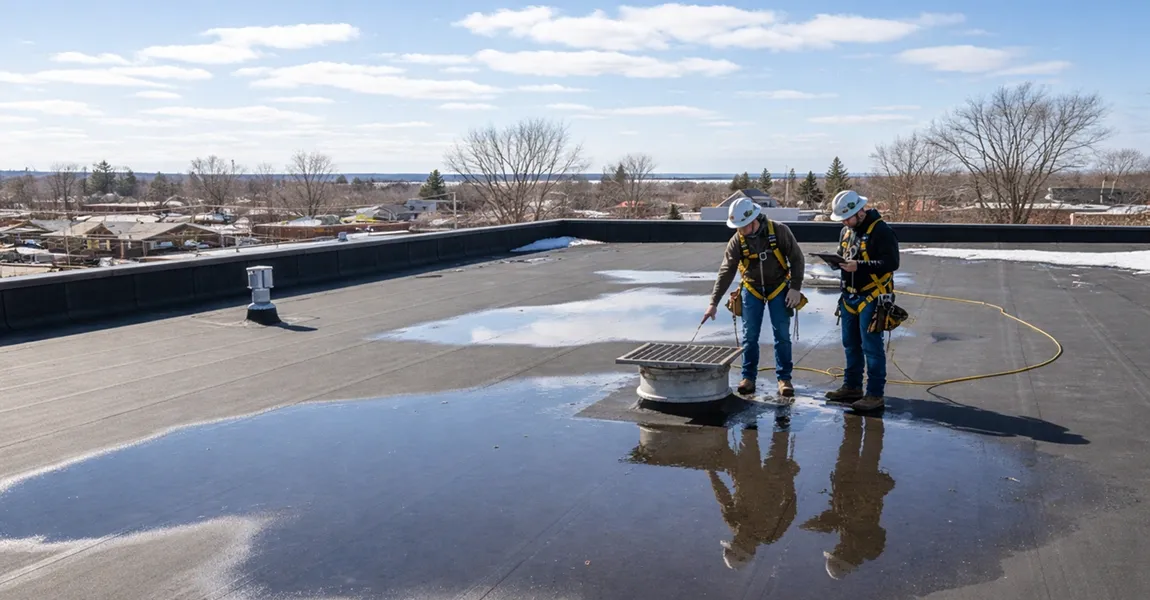
When the snow finally loosens its grip on Marquette, many business owners feel a short wave of relief. Then the calls start. Ceiling tiles stain. A musty odor shows up in the back office. A drip appears near a rooftop unit. The seasonal thaw is a real stress test for low-slope systems, and water pooling is one of the most common triggers. If you manage a facility downtown, near the lakefront, or anywhere that gets hit with heavy lake-effect snow, flat roofing in Marquette needs a thaw-season plan, not just a winter plan.
At Upper Peninsula Roofing, we work with local business owners, property managers, and maintenance teams who want fewer surprises and more control. This guide breaks down why pooling happens, what to check first, and how to build a simple routine that protects the roof, the building interior, and day-to-day operations.
Why Seasonal Thaw Pooling Hits Low-Slope Roofs So Hard
During winter, snow sits like a blanket. During thaw, that blanket turns into moving water. On a steep roof, meltwater runs off fast. On a low-slope roof, water moves slower, and any minor dip becomes a temporary pond. That is why flat roofing in Marquette requires special attention in late winter and early spring.
NOAA has long documented how Great Lakes weather can shift quickly, with rapid temperature swings and mixed precipitation events. Those swings matter because they create repeated melt-freeze cycles. Water flows, refreezes at drains, then flows again, sometimes several times in the same week. Over time, that movement tests seams, flashings, and membrane edges.
What Water Pooling Really Means For A Commercial Roof
A little water on a roof right after a thaw is not unusual. The concern is water that sits long enough to stress the system. With flat roofing in Marquette, pooling becomes a problem when it:
- Stays in place for more than 48 hours after weather clears
- Collects around drains, scuppers, or rooftop equipment
- Shows up in the same area after every thaw
- Starts to darken the membrane or lift seam edges
Pooling is not just “standing water.” It is a signal that drainage is not working as designed, or the roof surface is no longer holding slope consistently.
The Most Common Causes Of Pooling After Snow Melt
If you are dealing with recurring ponds, there is usually a clear reason. Here are the top causes we see with flat roofing in Marquette.
Blocked Or Frozen Drains
A single blocked roof drain can turn a melt event into a shallow pool across a wide area.
Compressed Insulation Or Deck Deflection
Over time, snow load and foot traffic can compress insulation, creating dips that collect water.
Poor Drain Placement Or Inadequate Drain Count
Some older buildings were built for a different climate pattern. Today’s weather can overwhelm original drainage layouts.
Scupper And Downspout Bottlenecks
If scuppers are undersized or downspouts clog with ice and debris, water backs up onto the roof.
Rooftop Unit Curbs And Penetrations
Water often collects behind HVAC curbs, vent stacks, and pipe runs, especially when snow drifts melt unevenly.
When a business calls us about flat roofing in Marquette, we start by finding which of these is driving the pattern.
How Pooling Water Turns Into Real Building Problems
Pooling starts on the roof, but the impact shows up inside the building. The most common business disruptions include:
- Leaks that stain ceiling tiles and walls
- Moisture around electrical runs or light fixtures
- Mold risk in insulated cavities
- Slippery floors and safety concerns in customer areas
- Damage to stored inventory or backroom materials
- Tenant complaints and emergency maintenance calls
In B2B terms, pooling water affects uptime, tenant satisfaction, and predictable budgeting. That is why proactive flat roofing in Marquette maintenance is a business decision, not just a construction decision.
The First Thaw Checklist For Marquette Business Owners
If you want quick wins, start here. These are the highest-value checks during the first major melt.
Check Roof Drains And Strainers
Look for ice, leaves, grit, and roofing granules. Clear strainers so meltwater can move.
Check Scuppers And Downspouts
Make sure the exit path is open, not just the roof-side opening.
Look For “Dirty Rings”
A ponded area leaves a dirt outline when it dries. That outline shows you exactly where water sits.
Inspect Seams And Edges Near Ponding Zones
If water sits, seams do more work. Look for lifting edges or exposed seam tape.
Note Any Interior Signs
Even small ceiling stains matter. Document them early so you can map them to roof areas.
A consistent routine like this keeps flat roofing in Marquette from turning into surprise repairs in the middle of a busy season.
A Local Scenario: A Marquette Retail Building After A Late-February Thaw
A property manager in Marquette called us after a warm spell in late February. Snow had piled up along the parapet wall, then melted fast. Staff noticed a stain spreading across ceiling tiles near a back hallway.
Our inspection found two key issues tied to flat roofing in Marquette thaw behavior:
- A drain strainer had iced over, so water backed up and ponded near an HVAC curb.
- The membrane seam behind that curb had minor separation from years of expansion and contraction.
We cleared the drain, documented the ponding area, stabilized the seam, and recommended a simple pre-thaw drain routine for the maintenance team. The building stayed dry through the next thaw cycle, and the manager stopped playing “guess-and-react” every time temperatures jumped.
What A Professional Flat Roof Inspection Focuses On During Thaw Season
A thaw-season inspection is different from a summer walk-through. For flat roofing in Marquette, we focus on how meltwater behaves in real time.
Drainage Performance
We look at how water moves, where it slows, and where it sits.
Membrane Condition
We check for punctures, blistering, seam stress, and surface wear.
Flashings And Terminations
Parapet edges, wall flashings, and metal termination bars are common leak points when water backs up.
Penetrations And Rooftop Equipment
HVAC curbs, vent stacks, and conduit supports get extra attention because they create turbulence in water flow.
Evidence Mapping
We connect interior symptoms to roof zones using photos and clear notes. That is a major part of managing flat roofing in Marquette with confidence.
If you want to see the specific systems we work on, visit our Commercial Flat Roofing page.
How To Reduce Pooling Without A Full Roof Replacement
Not every pooling issue requires a major project. Many improvements are maintenance-driven.
Improve Drain Reliability
- Upgrade strainers where needed
- Add heat trace in chronic freeze zones if appropriate
- Establish a thaw-season drain check schedule
Correct Small Low Spots
In certain cases, targeted tapered insulation or localized slope correction can reduce standing water.
Reinforce Seams In High-Flow Areas
Seams near drains, scuppers, and rooftop units take the most stress during thaws.
Add Walk Pads In Traffic Lanes
Foot traffic can compress insulation over time and create dips. Walk pads protect the membrane and help preserve slope.
These are practical steps that can extend the life of flat roofing in Marquette and reduce recurring ponding.
The Role Of Snow Load And Drift Patterns On Low-Slope Roofs
Marquette’s snow does not always land evenly. Wind off Lake Superior can create drifts that stack higher along parapets, behind rooftop equipment, and in corners. When those drifts melt, they release water unevenly, often faster than drains can handle.
That is why flat roofing in Marquette maintenance should include drift awareness:
- Identify where drifts form each winter
- Watch those zones first during thaws
- Keep drains closest to those zones clear
- Inspect seams and flashings near drift edges
This is simple, local knowledge that prevents repeat problems.
How To Talk To Your Maintenance Team About Thaw Readiness
If you manage multiple properties, you need repeatable steps your team can follow. Here is a clear way to assign responsibilities:
- One person checks roof drains during the first thaw day
- One person checks interior ceiling tiles in known risk areas
- Photos are taken and stored in a shared folder
- Any new stains trigger a professional inspection request
This creates a record and builds confidence. Strong flat roofing in Marquette management is about systems, not heroics.
Hyperlocal Weather Reality Check
Marquette weather can shift quickly. While your building might be dealing with lake-effect snow and strong winds, the broader region can be hit by storm systems that include hail bursts near Huron or sudden heavy rain events that people associate with Ohio. Those patterns matter because they show how fast conditions can change and how quickly roofs must transition from “frozen” to “flowing water.”
For flat roofing in Marquette, the key is readiness for change. Thaw water is not gentle. It is a volume event, and it exposes weaknesses fast. This guide is maintenance-focused and claim-safe. We do not negotiate, file, or manage insurance claims. Our role is inspection, documentation, and professional repair recommendations based on roof performance and building needs.
Why Upper Peninsula Roofing Is The Right Partner For Marquette Businesses
B2B roofing is not just materials and labor. It is scheduling, safety, documentation, and minimizing disruption. Upper Peninsula Roofing brings:
- Local crews who understand Marquette freeze-thaw behavior
- Clear inspection reporting with photos and practical recommendations
- Maintenance-first planning that reduces emergency calls
- Experience working around tenant schedules and business hours
If you prefer an in-person conversation, you can visit us in Iron Mountain, M to talk through your building’s roof plan.
Practical Thaw-Season Tips From Licensed Roofers
Here are field-proven tips we share with business owners managing flat roofing in Marquette:
- “If drains are clear before the thaw, most leaks never start.”
- “Dirty rings tell the truth about where water sits.”
- “The same ponding spot every year is a slope issue, not bad luck.”
- “HVAC curbs are leak magnets during thaws. Inspect them early.”
These are not theories. They are patterns we see across local commercial roofs year after year.
What To Document After A Pooling Event
Good records help you make smart decisions. After a thaw, document:
- Photos of ponded areas and dirt rings
- Drain and scupper condition photos
- Any seam or flashing concerns
- Interior ceiling stains with room location noted
- The date and weather shift that triggered pooling
This documentation supports better budgeting and smarter maintenance timing for flat roofing in Marquette.
The Bottom Line For Marquette Businesses
Seasonal thaws are predictable. Leaks do not have to be. If your building has a low-slope system, a simple plan for drainage checks, seam review, and documentation can prevent most pooling-related surprises.
Upper Peninsula Roofing helps local businesses protect operations by keeping flat roofing in Marquette performing the way it should, even during the messiest part of winter.
Schedule your flat roof inspection today.
Frequently Asked Questions
What Counts As Problem Pooling On A Flat Roof?
If water remains more than 48 hours after weather clears, or repeatedly ponds in the same place, it is worth addressing for flat roofing in Marquette.
Why Does Pooling Seem Worse After Snow Melt Than Rain?
Snow melt can release water over longer periods, and drains can be frozen or blocked. That combination makes pooling more likely with flat roofing in Marquette.
Can Pooling Damage A Commercial Roof Membrane?
Yes. Standing water can stress seams, increase wear, and reveal weak flashings over time.
How Often Should A Flat Roof Be Inspected In Marquette?
At least twice per year, plus after major thaw events. Regular checks improve flat roofing in Marquette performance.
What Is The Fastest Fix For Repeated Ponding?
Start with drainage. Clear and improve drain paths first, then evaluate slope and seam reinforcement if needed.