


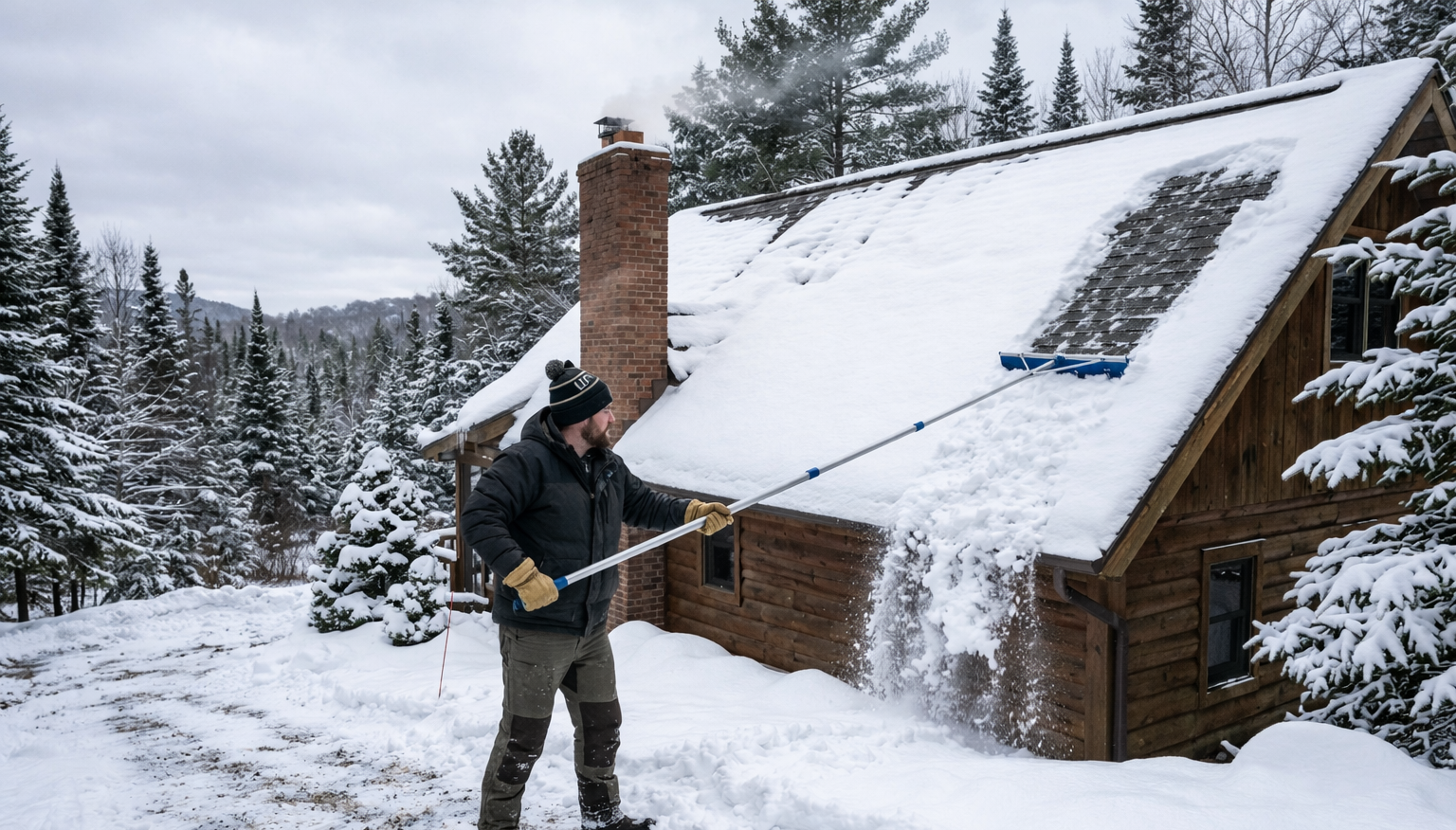
Late winter in Michigan’s Upper Peninsula often brings one more surprise: another round of heavy lake-effect snow. Just when homeowners think the worst of winter has passed, a new storm drops several inches, or even feet, of snow onto rooftops. In these conditions, roof snow raking in Upper Peninsula homes becomes an important way to manage snow load and reduce the risk of ice dams and leaks.
At Upper Peninsula Roofing, we help homeowners understand when snow raking is useful, how to do it safely, and when professional help is the better option. With the region’s long winters and freeze–thaw cycles, safe snow removal from the roof edge can make a big difference in preventing water damage later in the season.
This guide explains how roof snow raking in Upper Peninsula homes works, why it matters, and how to approach it safely during heavy snow periods.
Why Late Winter Snow Can Create Roof Problems
Snow alone does not always damage a roof. The real challenge comes when large amounts of snow sit on the roof for weeks and then begin melting unevenly.
Lake-effect systems near Lake Superior can deliver intense snowfall. According to NOAA weather observations across the Great Lakes region, these storms can build snow depth quickly and keep roofs under heavy load for extended periods.
When the sun warms the roof surface, melting begins on upper sections first. Water runs downward and refreezes near colder edges. That process contributes to ice dams, which is why roof snow raking in Upper Peninsula homes is often recommended after major snow events.
Removing the lower portion of snow near the eaves helps meltwater escape instead of backing up beneath shingles.
What Roof Snow Raking Actually Does
Roof snow raking focuses on removing the first few feet of snow from the roof edge while leaving the upper snow layer undisturbed.
The goal is simple:
- Reduce pressure on the roof edge
- Allow melting snow to drain properly
- Lower the chance of ice dam formation
Because it targets the most vulnerable part of the roof, roof snow raking in Upper Peninsula homes can reduce winter roof stress without needing to remove every inch of snow.
When Snow Raking Is Most Helpful
Not every snowfall requires action. Snow raking becomes useful when certain conditions appear.
Heavy Snowfall Events
Large storms can quickly add weight to the roof, especially in lake-effect zones.
Snow Depth Near The Eaves
If snow builds up several feet deep near the roof edge, melting water may struggle to escape.
Repeated Freeze–Thaw Cycles
Warm afternoons followed by cold nights increase ice dam risk.
Previous Ice Dam Problems
Homes that experienced ice dams in the past benefit from early roof snow raking in Upper Peninsula winter conditions.
Signs Snow Load Is Becoming A Concern
Most roofs are designed to handle significant snow loads. However, certain warning signs indicate that snow buildup should be reduced.
Large Icicles Along Gutters
These can signal melting snow refreezing at the roof edge.
Interior Ceiling Stains
Leaks during warm periods often follow snow accumulation.
Uneven Roof Snow Patterns
Snow melting unevenly may indicate heat escaping into the attic.
Sagging Gutters Or Fascia
Heavy snow weight near the edge can strain these components.
When homeowners notice these signs, roof snow raking in Upper Peninsula homes can help reduce further stress on the roof system.
A Local Scenario From Iron Mountain
Last February, a homeowner in Iron Mountain called our team after a series of lake-effect storms piled snow nearly two feet deep along the roofline. The home had experienced ice dams the previous winter, so the homeowner wanted to act early.
Using a roof rake from the ground, they cleared snow from the first four feet of the roof edge. This simple step allowed melting snow to drain properly during the next warm spell.
By performing roof snow raking in Upper Peninsula conditions early, the homeowner avoided ice dam buildup and prevented interior water stains.
Situations like this highlight how proactive snow management can protect the roof before problems begin.
How To Perform Roof Snow Raking Safely
Safety should always be the first priority. Roof snow removal should be done from the ground whenever possible.
Use A Proper Roof Rake
Roof rakes have long handles designed to reach the roof edge safely.
Start At The Roof Edge
Pull snow downward gently without scraping shingles.
Work In Small Sections
Removing manageable sections prevents sudden snow slides.
Avoid Standing Under Heavy Snow
Snow can slide unexpectedly once loosened.
By focusing on safe ground-level work, roof snow raking in Upper Peninsula homes becomes a practical winter maintenance task.
Common Mistakes To Avoid
Homeowners sometimes try aggressive methods that can damage roofing materials.
Climbing Onto The Roof
Walking on snowy or icy roofs increases fall risk and can damage shingles.
Using Metal Shovels
Hard edges can scrape granules from asphalt shingles.
Removing Too Much Snow
Clearing the entire roof surface is unnecessary and can disturb the protective snow layer.
Ignoring Weather Conditions
High winds or icy ground conditions make snow raking unsafe.
A cautious approach helps ensure roof snow raking in Upper Peninsula homes remains effective and safe.
When To Call A Professional Roofing Team
Sometimes snow accumulation becomes too severe for safe ground-level removal.
Professional help may be necessary when:
- Snow depth is extremely heavy
- Ice dams have already formed
- Roof access areas are unsafe
- Interior leaks are appearing
If snow buildup has already led to water intrusion, homeowners may need assistance from services like Emergency Roofing to stabilize the situation and inspect the roof.
Professional crews have the equipment and experience needed to manage snow removal safely in difficult conditions.
How Snow Raking Helps Prevent Ice Dams
Ice dams form when melting snow refreezes at the roof edge. Removing the snow near the eaves reduces the amount of meltwater that can freeze in that area.
By performing roof snow raking in Upper Peninsula homes early in the season, homeowners reduce the conditions that lead to ice dam formation.
This simple step can protect:
- Shingles
- Roof decking
- Attic insulation
- Interior ceilings
Snow raking does not eliminate every ice dam risk, but it is one of the most effective preventive steps available.
Weather Patterns That Influence Snow Buildup
Upper Peninsula winters are shaped by Great Lakes weather systems. Snowfall from lake-effect storms can accumulate rapidly, especially near Lake Superior.
Regional weather shifts can also affect local conditions. For example:
- Hailstorms near Huron sometimes form within broader storm systems moving across the Midwest.
- Sudden rain bursts similar to monsoon conditions in Ohio demonstrate how fast Great Lakes weather patterns can change.
These shifting patterns show why homeowners need to stay alert during late winter. Heavy snow followed by rapid warming often leads to the conditions that require roof snow raking in Upper Peninsula homes.
Practical Advice From Local Roofers
Experienced roofers often give the same winter advice to homeowners.
- “Focus on the first few feet near the eaves.”
- “Use a roof rake designed for shingles.”
- “Do not climb onto the roof unless conditions are completely safe.”
- “Watch how snow melts across the roof. It tells you a lot about attic heat loss.”
These simple observations come from years of helping homeowners manage roof snow raking in Upper Peninsula winters. This article encourages safe limits when removing roof snow. Homeowners should only attempt snow raking from the ground using proper tools and stable footing. Avoid climbing onto icy roofs or attempting unsafe removal methods.
Why Local Roofing Experience Matters
Managing snow and ice on roofs requires knowledge of regional weather patterns and building practices. Contractors who regularly work in northern Michigan understand how snow loads, ventilation, and roof design interact during winter.
Upper Peninsula Roofing provides guidance, inspections, and winter roofing support tailored to local conditions. Homeowners can also visit us in Iron Mountain, MI to speak with our team about roof safety and winter preparation.
When dealing with roof snow raking in Upper Peninsula conditions, local experience helps homeowners make informed decisions.
Stay Ahead Of Heavy Snow This Winter
Late winter storms are common in Michigan’s Upper Peninsula, and snow accumulation can build quickly. By removing snow near the roof edge safely and monitoring conditions during warm spells, homeowners can protect their roofs from ice dams and water damage.
If snow buildup becomes too heavy or unsafe to handle alone, professional assistance is the best choice.
Call for safe snow removal help from Upper Peninsula Roofing and keep your roof protected throughout the winter season.
Frequently Asked Questions
How Much Snow Should Be Removed From A Roof
Usually only the first few feet near the roof edge need to be cleared. This helps prevent ice dams.
Can Snow Raking Damage Shingles
Using proper roof rakes and gentle pulling motions helps avoid damage.
Is Snow Removal Necessary After Every Storm
Not always. Snow raking is most useful when heavy accumulation combines with freeze–thaw cycles.
Should I Walk On My Roof To Remove Snow
No. Roof snow removal should be done from the ground whenever possible.
Does Snow Raking Prevent Ice Dams Completely
While it cannot prevent every ice dam, roof snow raking in Upper Peninsula homes greatly reduces the conditions that cause them.