


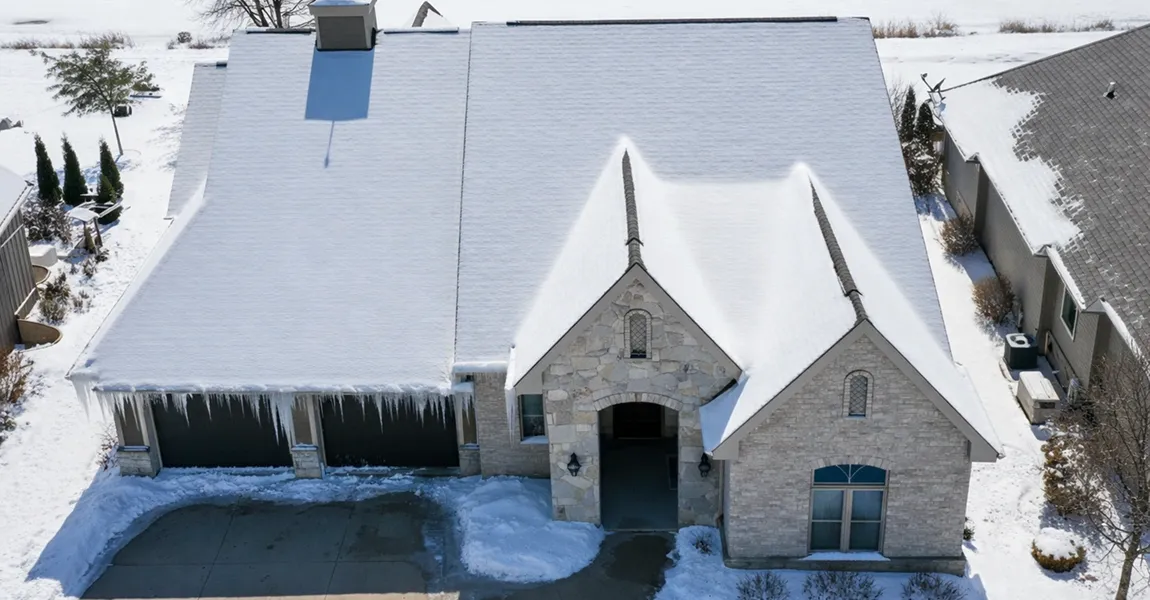
Freeze–thaw cycles are the reason ice dams keep coming back in Iron Mountain. One day it is below zero, the next day the sun warms the roof just enough to start melting snow. Then temperatures drop again and that meltwater refreezes at the eaves. Before you know it, you have a thick ridge of ice that blocks drainage and pushes water where it does not belong. If you are seeing big icicles, ceiling stains, or wet attic insulation, ice dam removal in Iron Mountain is not just a convenience. It is a safety and home-protection step.
At Upper Peninsula Roofing, we help local homeowners get control of ice dams with professional removal methods that protect the roof surface and lower the chance of repeat problems. This guide explains what causes ice dams, what to do when they show up, and what “safe removal” really means in a Michigan winter.
Why Freeze Thaw Cycles Trigger Ice Dams In Iron Mountain
Iron Mountain winters are not only cold. They are changeable. Those temperature swings are the real troublemaker. Here is the common pattern we see:
- Heat escapes into the attic and warms the roof deck
- Snow melts higher on the roof
- Meltwater runs down to the colder roof edge
- Water refreezes at the eave and forms a dam
- New meltwater gets trapped behind the dam
- Trapped water works under shingles and into the home
NOAA has long tracked how Great Lakes regions experience rapid winter temperature shifts and mixed precipitation events. That matters because a roof can go from “frozen solid” to “moving water” in a single afternoon.
When that cycle repeats for weeks, homeowners in the Upper Peninsula often need ice dam removal in Iron Mountain to stop water backup before it becomes interior damage.
What Ice Dams Can Do To A Home
Ice dams are more than an “outside problem.” They can affect your roof system and your living space.
Common Roof And Interior Impacts
- Water stains on ceilings or walls
- Wet attic insulation that loses performance
- Mold-friendly moisture in hidden cavities
- Warped roof decking over time
- Loose shingles near the eaves
- Bent gutters from heavy ice weight
- Slippery entryways from falling icicles
If you have recurring leaks during warm spells, ice dam removal in Iron Mountain is often the fastest way to stop the water path while you plan longer-term prevention.
How To Tell If You Have An Ice Dam
Homeowners often ask, “Is it really an ice dam, or is it something else?” These signs strongly suggest ice dam activity:
- Thick ice ridge at the roof edge
- Large icicles hanging from gutters or fascia
- Leaks that start during a warm-up, not during deep cold
- Water staining near exterior walls or along the ceiling edge
- Snow melting in patches on the roof (a heat-loss clue)
Seeing one sign does not guarantee a dam, but if multiple signs appear together, ice dam removal in Iron Mountain should move to the top of your list.
What To Do Right Away If You Notice A Leak
If a midwinter thaw reveals a drip, do this before anything else.
Step 1 Protect Safety And Electricity
- Move items away from the leak area
- If water is near a light fixture, shut off that circuit at the breaker
Step 2 Control The Water
- Put a bucket under the drip
- If the ceiling is bulging, poke a small drain hole at the lowest point so water releases into a bucket
Step 3 Document The Issue
- Take photos of the stain, drip, and any visible ice buildup outside
- Write down the date and weather change
Step 4 Call A Professional
When water is actively entering, ice dam removal in Iron Mountain is time-sensitive. The longer water backs up behind the dam, the more places it can travel.
Why DIY Ice Dam Removal Often Goes Wrong
We get it. When you see ice, you want to break it. But many DIY approaches can damage the roof or create safety risks.
Common DIY Mistakes
- Chopping ice with a hammer or shovel (shingle damage is common)
- Using salt or harsh chemicals (corrosion and staining can follow)
- Climbing ladders on icy ground (fall risk)
- Trying to melt channels with open flame (hazardous and damaging)
- Pulling down icicles from below (ice can fall unpredictably)
Safe ice dam removal in Iron Mountain is about controlled melting and drainage relief, not force
The Professional Method That Protects Roofs
The safest professional approach is low-pressure steam. It removes ice without tearing up shingles or beating on metal components.
What Steaming Does
- Melts ice gradually
- Clears drainage paths at the eaves
- Relieves water backup behind the dam
- Protects shingles and flashing compared to chopping
This is why many homeowners choose ice dam removal in Iron Mountain with a trained crew instead of risking roof damage with DIY tools.
Visual Suggestion Instruction: Image showing roofer steaming ice off roof edge.
What A Professional Visit Usually Includes
A thorough service call is not just “remove ice and leave.” It is removal plus diagnosis.
Step 1 Safe Site Setup
- Ladder placement and stabilization
- Ground safety zone for falling ice
- Roof-edge evaluation for safe access
Step 2 Targeted Ice Removal
- Steam application in key dam zones
- Controlled clearing to restore drainage
- Minimal disruption to shingles and edges
Step 3 Leak Path Checks
- Eave edge inspection
- Flashing review near valleys and penetrations
- Attic moisture check if accessible
If storms also caused wind-driven damage, we may recommend reviewing broader roof conditions on the Storm Damage page to understand how winter events can compound roof issues.
For homeowners who want to stop repeat problems, ice dam removal in Iron Mountain should be paired with a prevention plan, not treated as a one-time event.
A Local Customer Scenario In Iron Mountain
A homeowner near Iron Mountain called us after a January warm-up. They noticed dripping near a window header and a musty smell in the hallway. Outside, they had thick icicles and a heavy ice ridge at the eaves.
During ice dam removal in Iron Mountain, our crew found:
- A dense ice ridge blocking gutter drainage
- Meltwater trapped behind the ridge
- Moisture tracks in the attic leading back to the eave area
We safely steamed the dam, restored drainage, and documented what we found. Then we explained the root cause in plain language: attic heat loss was melting snow unevenly, and the eaves stayed cold enough to refreeze that water. Once the dam was removed, the homeowner scheduled a follow-up ventilation and insulation review to reduce repeat ice dam formation.
That is the goal: stop the water now, then reduce the odds you need ice dam removal in Iron Mountain again next thaw.
Why Some Homes Get Ice Dams Every Winter
If ice dams are recurring, the roof is usually telling you something. Here are the most common root causes we see locally:
Uneven Attic Insulation
Thin or missing insulation creates hot spots that melt snow.
Air Leaks Into The Attic
Warm air leaks around attic hatches, ceiling penetrations, or bath fan housings.
Poor Attic Ventilation Balance
Blocked soffit vents or weak exhaust ventilation allows heat and moisture to linger.
Roof Design Factors
Some roof shapes, valleys, or dormer transitions create colder eave zones and heavier drift areas.
A quality ice dam removal in Iron Mountain service includes educating you on which of these is most likely in your home.
The Business-Like Checklist For Prevention
This is the practical checklist our licensed roofers recommend for homeowners who want fewer winter surprises.
Seal Warm Air Leaks
- Weatherstrip attic hatch
- Seal around vent pipes and ceiling fixtures
- Verify bath fans vent outdoors, not into the attic
Improve Attic Ventilation
- Ensure soffit vents are clear
- Confirm airflow path from soffit to exhaust vents
- Watch for insulation blocking intake vents
Maintain Consistent Insulation
- Even coverage across attic floor
- Extra attention near exterior wall plates
Manage Roof Edge Snow
- Use a roof rake from the ground to clear the first few feet near the eave after big storms
- Avoid scraping shingles down to bare surface
These steps help reduce the conditions that trigger ice dam removal in Iron Mountain in the first place.
What About Weather Patterns Outside The Upper Peninsula
Homeowners sometimes wonder why winter feels “weirder” than it used to. Regional storm tracks can be unpredictable. For example, hailstorms near Huron can be part of broader systems that later bring strong winds and temperature swings north. And sudden, intense rain bursts people associate with Ohio can show how quickly moisture-heavy systems can evolve.
You may not get the exact same event in Iron Mountain, but you can feel the effect in the form of rapid warm-ups, wind shifts, and quick refreezes. Those are the conditions that increase demand for ice dam removal in Iron Mountain during midwinter thaws.
Safety Tips While You Wait For Help
If you have active leaking and you are waiting for a crew, keep these safety tips in mind:
- Keep kids and pets away from icicle zones
- Avoid walking under heavy gutter ice
- Do not try to knock ice down with poles or tools
- Keep interior airflow moving to reduce moisture buildup
- If you must enter the attic, step only on framing members, not drywall
Professional ice dam removal in Iron Mountain is safer because crews bring the right equipment, methods, and roof-edge experience.
Why Upper Peninsula Roofing Is Trusted Locally
Ice dams are common in northern Michigan, but the solution is not guesswork. Upper Peninsula Roofing is trusted because we bring:
- Local winter experience and safety-first procedures
- Proven steam removal methods for ice dams
- Clear documentation and straightforward recommendations
- Practical advice you can actually use
If you want to talk with our team in person, you can always visit us in Iron Mountain, M.
When you need ice dam removal in Iron Mountain, you want a crew that understands the roof, the weather, and the safest way to stop the problem without creating a new one.
Safer Winter Starts With The Right Plan
Freeze–thaw cycles are not going away. That means ice dams will keep showing up in Iron Mountain homes, especially when attic heat loss and roof-edge cold zones work together. The good news is you do not have to guess your way through it. With safe steam removal and a clear prevention plan, you can protect your roof, your attic, and your interior finishes.
If you are seeing heavy ice buildup or any signs of leaking, request professional ice dam removal today. Call our team and ask about safe, same-season solutions for ice dam removal in Iron Mountain.
Frequently Asked Questions
How Fast Should I Schedule Ice Dam Removal
If you are seeing active leaking, thick ice ridges, or growing icicles, schedule ice dam removal in Iron Mountain as soon as conditions allow safe roof access.
Is Steaming Better Than Chopping
Yes. Steaming removes ice with far less risk to shingles, flashing, gutters, and roof edges.
Will Ice Dams Come Back After Removal
They can if the root cause remains. That is why we pair ice dam removal in Iron Mountain with prevention guidance around insulation, ventilation, and air sealing.
Can I Use Salt Socks On My Roof
We do not recommend harsh salts on roofing surfaces because they can corrode metal parts and affect roofing materials. A professional approach is safer.
What Is The Best Long-Term Fix
The best long-term fix usually includes balanced attic ventilation, consistent insulation, sealing warm air leaks, and good roof-edge snow management. These steps reduce the need for repeat ice dam removal in Iron Mountain.