


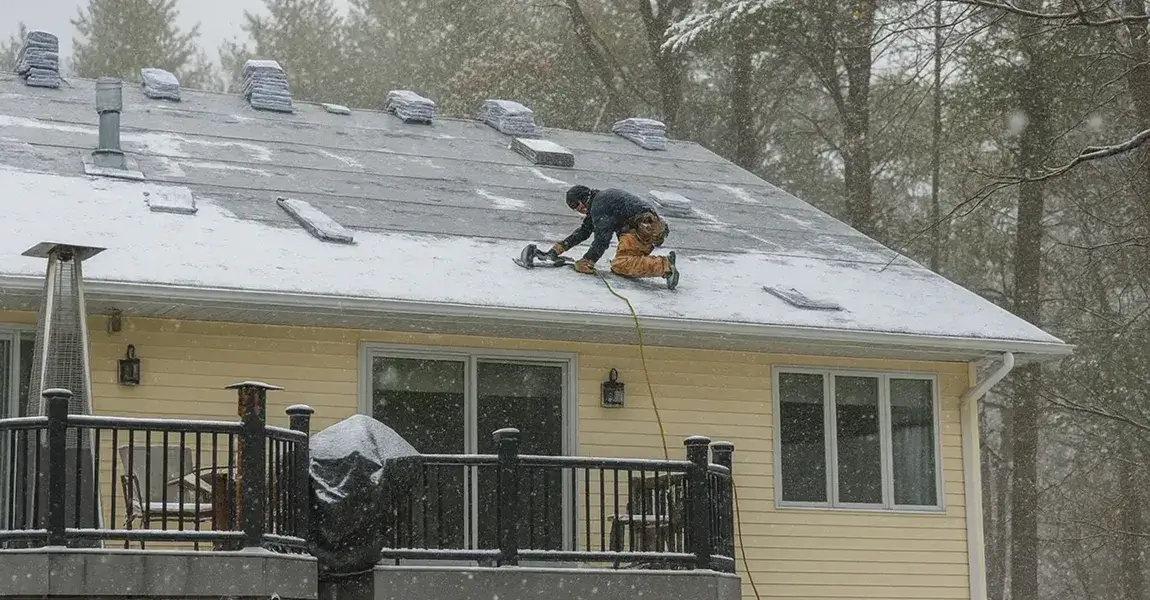
Winters in Michigan’s Upper Peninsula are no joke. With freezing temperatures, lake-effect snow, and long stretches of subzero wind chill, homeowners often assume roof work must pause until spring. But the truth is more nuanced, bold winter roof replacement can be done safely and effectively under the right conditions. As long as the proper materials, timing, and installation techniques are used, a winter project can protect your home long before spring thaw arrives.
At Upper Peninsula Roofing, we’ve handled every type of cold-weather project imaginable, from emergency ice-damaged roofs in Marquette to full tear-offs in Iron River during mid-January. With decades of experience and a deep understanding of local weather patterns, we help homeowners make informed decisions about winter roof replacement based on safety, materials, and structural readiness.
This full guide explains what’s possible, what’s not, and how to protect your home during the harshest season of the year.
Midwinter Installations in Extreme Cold
By midwinter, the Upper Peninsula can see temperatures dip below zero nightly, with Marquette and Iron Mountain frequently dealing with windchill readings that cut through layers. According to NOAA, these extreme cold periods are often paired with sudden squalls, rapid temperature drops, and lake-effect bursts that unload several inches of snow in an hour.
Yet despite these conditions, there are situations where winter roof replacement becomes necessary, even unavoidable. Severe leaks, structural sagging, storm damage, or pre-sold real estate obligations sometimes leave homeowners with no option but to replace the roof during the coldest months of the year.
The question is: When is it actually safe?
The answer depends on materials, moisture, timing, and experienced installation.
Why Winter Roof Replacement is Even Considered
Homeowners across the Upper Peninsula often ask why roofing companies would ever replace a roof in December or January. The reasons are practical:
- Leaks worsen with freeze–thaw cycles
- Ice dams cause shingles to lift
- Snow accumulation adds weight to weakened structures
- Expired roofing warranties require timely action
- Home sales require inspection clearance
- Storms cause urgent damage
In other words, waiting until spring isn’t always an option. When damage accelerates each cold night, timely winter roof replacement can actually save a home from more destructive and costly problems.
How Cold Is Too Cold for Roofing?
This question gets asked constantly. For most materials, roofing requires:
- Dry conditions
- A minimum temperature for adhesives
- Proper ventilation and moisture control
Asphalt shingles, for example, need mild solar warmth to activate their sealant strips. They can still be nailed in winter, but installers must take extra steps to ensure proper bonding.
Metal roofing, on the other hand, performs extremely well in cold environments, making it the most winter-friendly option for winter roof replacement in the Upper Peninsula.
Our team uses material-specific cold-weather techniques to ensure every installation is secure regardless of temperature swings.
Local Considerations: Upper Peninsula Conditions Are Unique
Homeowners in Marquette, Iron Mountain, Kingsford, Escanaba, Ontonagon, and Iron River face weather unlike any other region:
- Lake-effect snowfields create sudden moisture changes
- Rapid freeze–thaw cycles can lift older shingles
- Slush buildup causes dangerous ice formations
- Wind gusts along Lake Superior hit roofs sideways
- Hailstorms (especially near Huron) can crack weak shingles
- Sudden monsoon-style rains, typical in Ohio, occasionally sweep north into the U.P.
This unpredictable climate means winter roof replacement requires local expertise, not generic national guidance.
The Truth: Winter Roof Replacement Can Be Safe When Done Correctly
Many homeowners mistakenly believe that winter roofing is impossible. In reality, professional roofers trained for cold climates handle these conditions every year.
Safe winter roof replacement depends on:
- Installer experience
- Proper scheduling windows
- Material choice
- Moisture control
- Working around weather systems
- Using cold-rated underlayments
- Knowing how to handle brittle shingles
At Upper Peninsula Roofing, we combine precise timing, flexible staffing, and weather-monitoring tools to perform winter installations safely and efficiently.
Professional Roofer Insight: What We Tell Customers
Our licensed roofers share honest advice drawn from decades of winter work:
- “Shingles don’t fail because it’s winter. They fail when installed wrong in winter.”
- “Clean, dry surfaces matter more than temperature.”
- “If we can’t do it safely, we don’t schedule it.”
- “Metal roofing is ideal for winter, snow slides right off once installed.”
- “Ice-damaged roofs almost always need replacement before spring.”
These insights highlight why choosing experienced cold-weather installers is vital for successful winter roof replacement.
A Real Customer Scenario: The Michaels Family in Iron Mountain
In February last year, the Michaels family discovered water dripping through their kitchen ceiling after a sudden warm spell. Their 25-year-old shingles had cracked during subzero temperatures, allowing meltwater to travel into the attic.
They were worried that a full replacement in midwinter wasn’t safe.
Our inspection revealed:
- Brittle shingles
- A failing underlayment
- Multiple ventilation blockages
- Ice dams along three eaves
We scheduled their winter roof replacement during a 5-day mild stretch. Using winter-grade adhesives, staged tear-off sections, and insulated debris cutoff, we replaced their roof safely and efficiently.
Today, their home is leak-free, safer, and better ventilated than ever, with no issues despite another harsh Upper Peninsula winter.
What Types of Roofing Work Are Safe in Winter?
Different materials respond differently to cold. Here’s what’s typically safe:
1. Metal Roof Installation
Best option in winter. No adhesives required. Panels secure tightly in any temperature.
2. Asphalt Shingle Roof Replacement
Safe with proper cold-weather handling:
- Hand-sealing certain shingles
- Storing materials in heated trucks
- Using cold-rated underlayment
- Timing installation with daylight warming
3. Ice Dam Removal + Roof Prep
Often needed before full replacement.
4. Ventilation Upgrades
Soffits, ridge vents, and roof baffles can be installed year-round.
5. Decking Replacement
Only done when surfaces are dry and stable.
This makes winter roof replacement feasible as long as conditions are monitored closely and safety standards are enforced.
What Roofing Tasks Should NOT Be Done in Deep Winter?
Even though many tasks are safe, certain operations are avoided:
- Large flat-roof membrane installations
- Work during active snowfall
- Tear-offs during deep negative windchill
- Adhesive-heavy installation in freezing rain
Our crews never compromise safety or quality. If the weather is too dangerous, the job pauses immediately.
Roofing Safety Is Non-Negotiable
Winter roofing requires:
- Ice-rated footwear
- Harness and anchor systems
- Snow clearing protocols
- Heated tool storage
- Moisture monitoring
- Strict surface-prep standards
These protocols ensure winter roof replacement is not only possible, but performed with complete confidence. Our guidance focuses solely on structural safety, feasibility, timing, and building science. We do not reference insurance coverage, payouts, or negotiation. However, we can assist homeowners with documentation, photos, and repair details for personal records.
How Timing Impacts Winter Roof Replacement
Timing windows matter. We typically schedule winter installations during:
- Sunny stretches
- Warm side of freeze–thaw cycles
- Midday hours
- Days with stable wind patterns
- Periods without lake-effect alerts
This protects both the quality of your roof and the safety of our team.
For homeowners considering future planning, our Roof Replacement page explains long-term scheduling options in detail.
The Role of Ventilation and Insulation
Even the best winter roof replacement won’t perform well if the attic is poorly insulated or improperly ventilated.
Cold-weather issues like:
- Ice dams
- Attic frost
- Drafts
- Heat loss
- Premature shingle aging
…are caused by heat escaping into the attic, not the temperature outside.
As part of every winter replacement, we evaluate:
- Ridge vents
- Soffit vents
- Attic airflow
- Insulation levels
- Moisture movement
This whole-home approach prevents recurring cold-season roofing issues.
What Homeowners Should Do Before Winter Replacement
A simple checklist helps prepare your home:
Clear driveway access
Frozen debris piles slow the crew.
Move vehicles away
Protects them from falling snow or shingles.
Notify neighbors
Courtesy during winter noise and equipment use.
Prepare indoor spaces
Attic work may temporarily shift insulation.
These simple steps ensure a smooth, safe winter roof replacement experience.
Local Expertise You Can Trust
Michigan’s Upper Peninsula is one of the harshest winter roofing environments in the country. Because we work through these conditions every year, Upper Peninsula Roofing understands the exact strategies needed for safe, reliable winter roof replacement.
If you’re nearby, you can always Visit us in Iron Mountain, MI to discuss your winter roofing concerns in person.
Stay Safe. Stay Warm. Stay Protected.
Winter doesn’t wait, and neither should your roof. Whether you’re facing a severe leak, ice damage, or an aging roof nearing failure, you do have safe options.
For expert-level guidance and trusted results:
Ask about safe winter roof replacement options today.
Frequently Asked Questions
Is winter roof replacement really safe?
Yes, when handled by experienced cold-weather roofers using proper methods.
Do shingles seal properly in winter?
Yes, with hand-sealing and correct installation.
Is metal roofing better for winter installation?
Absolutely. It’s the most winter-friendly roof type.
Will a winter replacement cost more?
Not necessarily, scheduling depends on weather and project urgency.
Should I wait until spring?
If your roof is leaking or structurally compromised, waiting may cause further damage.